Starting a Modern Celtic Druid Path
A beginners guide to getting started in modern Druidry.
Beginning the Path
Welcome Traveler. When I first started exploring modern Druidry, I was completely lost as to how to begin. And so, I created this guide as my attempt at providing an easy and practical way to begin your own journey into Druidry.
I’ve broken it up into six steps, each one designed for you to root, learn, and grow… building a foundation of awareness, reciprocityThe vital exchange and balance of energy between all beings and elements of nature. It underscores the principle of giving back to the life-force or…, and integrity. And the cool thing? you don’t need initiations or ancient lineage to start. The moment you choose to pay attention to the land, the seasons, and your own breath… you’ve already begun.
Take your time. Move through these steps at your own pace. We’re not trying to perform Druidry here, our intentionA clear statement of purpose guiding thought and action. It directs energy toward desired outcome. Mindful intention shapes experience. is to live it.
💡Tip: You can treat each step as a season of practice. Spend a few weeks, or even a full moon cycle if you want, on each one before moving to the next. The slower you go, the deeper your roots grow.
Step 1: Root Yourself in the Land
Every modern druid path begins with direct, repeatable connection to the land under your feet.
Why This Comes First
Celtic spirituality has always been land-based. The ancient peoples of Ireland, Britain, and Gaul did not separate the sacred from their environment. The viewed the rivers, trees, wells, and hills… all as living presences. If you skip this foundation, the rest of your study becomes theory without context. Before gods, oghamAn ancient Irish writing system of lines carved along a central stem. It is used historically on stone monuments and spiritually in modern practice. Ogham…, or ritual structure, It is important that you learn to notice the world you actually live in.
Core Principle: Reciprocity
Like all relationships, your relationship with the Earth runs both ways. You receive air, water, and food from your local ecosystem, and in return, you give attention, care, and gratitude. That reciprocity is essentially Druidry in motion… no robe or groveA small community of Druids or a sacred stand of trees used for learning and ritual. It represents connection required.
Daily Observation Practice
- Choose a Location
This can be any place you visit on a regular basis. A backyard tree, park bench, shoreline, or even your balcony. As long as you can at least view nature.
- Record one detail
That’s it. Just one detail that stands out to you. It could be a bird call, cloud pattern, new growth you didn’t notice before. Write it in a dedicated journal or an app on your phone. Over weeks you’ll start reading the place like a book.
- Visit at the same time daily if possible
Early morning and dusk reveal the most change.
- Sit quietly for 5-10 minutes
Get into a comfortable position, and then just breathe…normally. Notice the temperature, wind direction. Watch the light and how it reflects and scatters. What do you smell? What sounds do you hear?
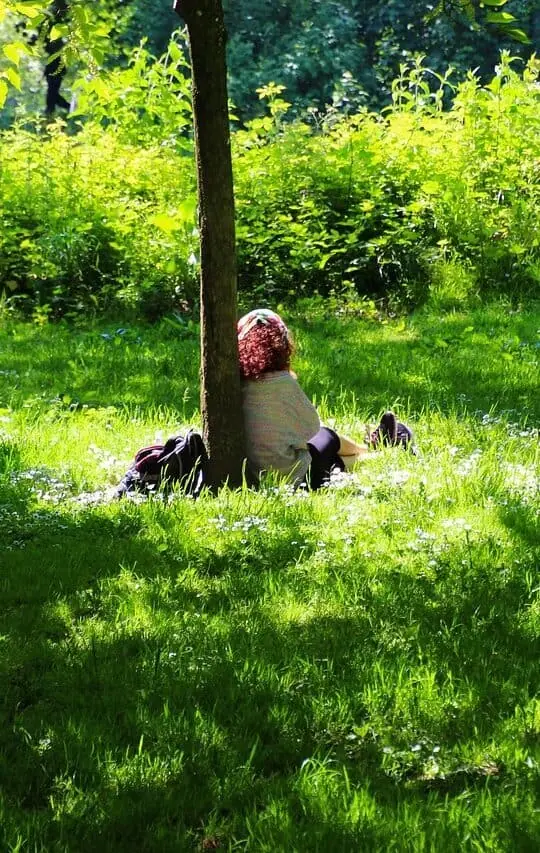
Optional: photograph the same view each visit. Over time you’ll see the turning of the seasons in your own archive.
Season and Sky Awareness
The Celtic year gracefully turns through both light and shadow, reflecting the intricate dance of nature. Begin tracking both the natural cycles, such as the changing seasons and the blooming of flowers, as well as the astronomical cycles, including the phases of the moon and the positions of the stars:
- Sunrise and sunset times: note when daylight begins to lengthen or fade.
- Moon phases: observe where it rises and how bright it feels. You can view the moon phases here.
- Weather patterns: front changes, bird migrations, first blooms or frosts.
These notes become your personal seasonal calendar, kind of like your own Wheel of the Year, rooted in your region rather than imported dates.
Honor the Land Spirits
Many Celtic traditions speak of the spirits of place. These are presences believed to inhabit specific locations such as mountains, rivers and ancient groves. Modern Druidry approaches them with respect, not superstition.
- Address the place aloud: “To the spirits of this land, I offer gratitude for being here.”
- Offer clean water, milk, or bread; biodegradable only.
- Leave no trash, and don’t remove natural items without permission
Common Mistakes
- Collecting experiences instead of relationships.
Focus on build your relationship with the land around you. Depth beats novelty. - Forcing visions or signs.
Don’t try to understand anything or “see” things that aren’t quite there. Observation is the practice; insight comes later. - Romanticizing a foreign landscape.
Sacredness isn’t limited to Ireland; it exists where you stand.
Step 2: Understanding the Celtic Roots
It is important for all followers to know where this tradition comes from, and how we know what we know.
Why Context Matters
“Celtic” isn’t a single ancient religion. It’s a patchwork of related cultures spread across Iron Age Europe and the early medieval British Isles. Learning how those cultures lived, spoke, and recorded their stories keeps your practice grounded in reality instead of fantasy. Without context, it’s easy to mistake modern invention for old tradition.
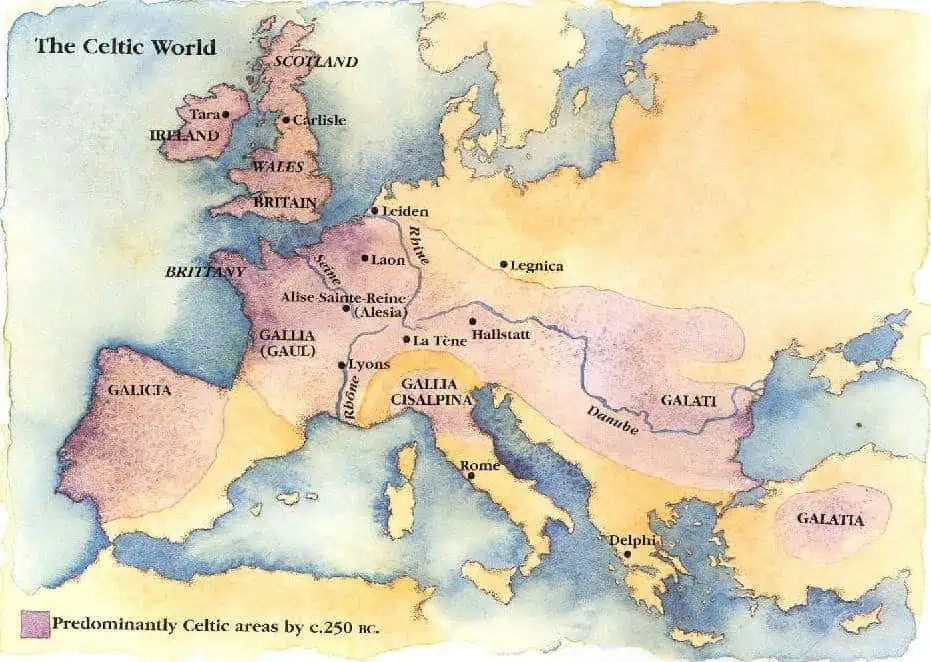
What “Celtic” Actually Means
Archaeologists and linguists use “Celtic” as a language and cultural family, not a race or a single tribe. Each region had its own gods, customs, and dialects. When you read about Celtic paganism, you’re really studying overlapping branches of one broad tree.
- Ireland – Rich myth cycles preserved in medieval manuscripts: Lebor Gabála Érenn, The Táin Bó Cúailnge, and tales of the Tuatha Dé DanannA divine race in Irish mythology associated with magic, wisdom, and the natural forces of the land. After being defeated by the Milesians, they retreated….
- Wales – The Mabinogion: four branches of myth where gods mingle with heroes and kings.
- Scotland & Isle of Man – Folklore, second sight, and persistent reverence for the land.
- Cornwall & Brittany – Local saints, holy wells, and Celtic-language survivals.
- Continental Gaul & Iberia – Inscriptions and Roman accounts of regional deities like CernunnosHorned god of wild places, pictured seated cross-legged with stag antlers. Cernunnos governs the traffic of life between wilderness, wealth, and the underworld’s deep stores…. and EponaHorse goddess revered across Gaul and the Roman Empire. Epona protects riders and herds, blesses travel and fertility, and stands as a symbol of freedom….
How We Know Anything At All
The ancient Celts didn’t write their religion down. Our sources come from three main streams:
- Roman and Greek writers (1st century BCE – 1st century CE) – outsiders describing druid practices, often with bias.
- Medieval Irish and Welsh scribes (7th – 13th century) – Christian monks recording pre-Christian stories in their own moral frameworks.
- Archaeology and linguistics – artifacts, place-names, and inscriptions that fill the gaps.
This means everything we do today is reconstruction, in other words, educated inference mixed with inspiration. Understanding that keeps you honest and prevents the “ancient secret knowledge” trap.
Reading with Discernment
When doing research, don’t take the word from any old website (including this one).Trickster-mage of the Mabinogi whose cleverness makes and unmakes fates. creator of Blodeuwedd and tutor of Lleu. Be sure to start with approachable. Be conscious that the information you’re reading is accurate and has been verified.
- Notice the lens. Ask who wrote the text, when, and why. Roman soldiers saw druids as opponents; monks saw pagans as ancestors in need of salvation.
- Separate myth from history. The Tuatha Dé Danann aren’t “ancient aliens” or lost Atlanteans; they’re mythic ancestors that reveal values, not literal records.
- Accept ambiguity. Contradictions mean the myths weren’t designed as doctrine… they’re stories in conversation with each other.
Recommended Foundations for Study
Examples of reputable sources:
- Early Irish Myths and Sagas – Jeffrey Gantz (trans.) (primary stories in readable form)
- The Mabinogion – Sioned Davies (trans.) (Welsh myths with notes)
- The Ancient Celts – Barry Cunliffe (archaeological context)
- The Druids – Peter Berresford Ellis (social role of druids)
- Celtic Mythology: Tales of Gods, Goddesses and Heroes – Philip Freeman (concise overview)
⚠️ A Word on Cultural Respect
Celtic paganism comes from real peoples whose descendants still exist in Ireland, Wales, Scotland, Brittany, Cornwall, and the Isle of Man. Honoring those cultures means learning about their languages and living traditions. It is not about claiming direct lineage to ancient druids. Speak about “modern Celtic practice” rather than “the old ways revived.” That small shift keeps your work respectful and accurate.
Step 3: The Living Unseen
Why This Step Matters
The Celtic worldview is animistic. Everything including the river, tree, wind, mountain, animal… is alive with presence and story. The “unseen world” isn’t somewhere far away; it interweaves with daily life. To practice Druidry well, you learn how to perceive and relate to these presences respectfully instead of chasing spectacle.
- Access points: wells, caves, rivers, shorelines, hill forts, stone circles, burial sites.
- Time distortion: stories often describe a day in the Otherworld as equaling years here. This is a reminder that ritual space bends perception.
- Purpose: the Otherworld mirrors the moral and ecological balance of this one; harmony there means harmony here.
Working With Deities
There was never a single “Celtic pantheon.” Each region had its own divine beings, often tied to landscape features. Think local rather than cosmic. When you meet the gods through story or practice, focus on relationship rather than hierarchy.
Commonly Honored Deities
Choose one or two that genuinely resonate with you. Study their myths, learn their symbols, and make small offerings. Remember, you’re building relationships, not a deityA deity in Celtic spirituality is a powerful being within the divine realm that Druids often venerate and seek guidance from. These deities can represent… collection.
 | Brigid | Brigid is among the most beloved figures in the Irish tradition: a luminous goddess whose domains we… | |
 | Lugh | Lugh is one of the most radiant and compelling figures in the Irish mythological tradition: a master… | |
 | The Morrígan | The Morrígan is one of the most arresting presences in Irish tradition: a figure of terror and truth… | |
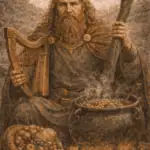 | The Dagda | The Dagda is the jovial powerhouse of the Tuatha Dé Danann: a kingly figure whose gifts are abundant… | |
 | Manannán mac Lir | Manannán mac Lir is one of the most consistently attested and conceptually coherent deities in Irish… |
Ancestors and Ancestral Connection
In Celtic societies, lineage and memory were sacred. Your ancestors, either blood, cultural, or chosen, all form a network of guidance and continuity. Honoring them keeps your spirituality rooted in real human story
- Create an ancestor space: photos, heirlooms, a candle, a bowl of water.
- Offer food, drink, or words of remembrance at Samhain or any quiet evening.
- Speak their names aloud; memory is invocation.
- If blood lineage is complex or painful, honor ancestral virtues rather than individuals... such as craftsmanship, courage, kindness.
Spirits of Place ( Land Spirits )
Every location has its own personality. Modern druids call them land spirits or genius loci. Respectful interaction means observation first, offeringThe giving of food second, interpretation last.
- Visit a local natural feature often… a tree, spring, stone, hill. Note how it “feels.”
- Offer clean water, milk, bread, or flowers with a clear statement of gratitude.
- Learn the human history of the land. Ask who lived here before you, what stories belong to this soil?
- Always leave places you visit cleaner than you found them.
The Sidhe / Fair Folk
The Sidhe (pronounced “shee”) appear throughout Irish lore as powerful beings connected to mounds and the Otherworld. They are not tiny fairies, they are proud and often unpredictable neighbors. Engage only with respect and healthy boundaries.
- Never demand favors or make bargains you don’t understand.
- Leave offerings at liminalThe threshold between two states places (crossroads, fairySupernatural beings or nature spirits associated with magic, beauty, and the unseen realms. forts) and walk away without looking back.
- Iron or salt are traditional protections if you feel overwhelmed.
- Kindness and courtesy go further than bravado.
⚠️ Healthy Discernment
Keep in mind that not every nudge or dream is a message from the gods. Stay grounded and use your judgement.
- Journal experiences objectively. Write down the date, time, sensations, emotions and possible mundane causes.
- Don’t be quick to judge. Check patterns over time instead of assuming instant meaning.
- Discuss intense experiences with trusted peers, not just online strangers.
- Maintain ordinary life routines; the sacred should support, not replace, your wellbeing.
Step 4: Walking the Wheel
Learn the rhythm of the Celtic year and how to live in step with the turning of the seasons.
Why the Wheel Matters
Druidry is seasonal at its core. The festivals of the Celtic year mark the relationship between light and dark, growth and rest, birth and decay. Celebrating them is less about historical reenactment and more about awareness. It’s about knowing where you are in the cycle and responding to it consciously.
The modern eightfold Wheel of the YearThe annual cycle of seasonal festivals that reflect the rhythms of the natural world. It marks solstices, equinoxes, and cross-quarter days. Following it helps people… was created in the mid-20th century, blending the four Celtic fire festivals (SamhainThe festival signaling the end of harvest and the start of winter. It is a time to honor ancestors and reflect on the cycle of…, ImbolcA festival marking the first stirrings of spring and the return of light. It is associated with cleansing, creativity, and new beginnings. Many traditions honor…, Bealtaine, LughnasadhThe first harvest festival dedicated to work, skill, and gratitude. It acknowledges the fruits of labor and the generosity of the land. Feasting and games…) with the ancient solstices and equinoxes to form a unified seasonal cycle. While inspired by older traditions, the Wheel itself is a modern framework used by Wiccans, Druids, and many other earth-based paths. How you honor these festivals should be guided by the land, climate, and natural rhythms of the place you live
How to Work with the Wheel
- Observe first. Before planning rituals, notice what actually happens outside. Weather shifts, daylight length, animal behavior.
- Start small. One candle, one offering, one reflection on each festival is enough to begin.
- Localize it. Adapt your celebrations to your hemisphere and biome; the principle is change, not replication.
- Record insights. Keep a seasonal journal to see patterns in your own life mirrored in the land.
The Four Fire Festivals
These are ancient Celtic seasonal celebrations that honor key shifts in the agricultural and pastoral year. They were traditionally marked with ritual fires, communal gatherings, and rites of protection, purificationA cleansing process that removes unwanted influences or energy. It is performed before or after ritual to maintain clarity. Methods include smoke, and renewal.
Marks the start of winter and the Celtic new year. A time of endings, remembrance, and divinationThe practice of seeking insight through symbolic systems or natural signs. It provides guidance and reflection rather than prediction. The goal is understanding rather than… when the boundary between worlds thins.
- Honor ancestors with food or candlelight.
- Reflect on what needs releasing before the dark months.
- Perform quiet divination or journaling for guidance.
The first signs of spring. Associated with BrigidGoddess of healing, poetry, and craft; a bright, many-skilled patron of hearth and inspiration. Brigid bridges sacred fire and fresh water, blessing poets, healers, smiths,… and the return of light. Focus on purification, inspiration, and new beginnings.
- Light candles or a small fire to welcome returning light.
- Bless your home and altarA sacred space where Druids and spiritual practitioners honor their connection to the natural world, ancestors, and deity. It typically features symbolic items such as…; refresh your tools.
- Dedicate creative or healing work to Brigid.
Beginning of summer, festival of vitality and fertility. Life is at its fullest; protection and celebration are key.
- Kindle a bonfire or candle for blessingA physical or verbal act that invokes divine energy to bestow protection, health, or good fortune upon a person, place, or event. In Druidry and… and protection.
- Decorate with flowers or greenery; honor the land’s fertility.
- Offer gratitude for relationships and community.
The first harvest, festival of skill and gratitude. Named for the god LughMany-skilled champion of the Tuatha Dé Danann; patron of arts, oaths, and victory. Lugh is the bright master of every craft whose festival Lughnasadh marks…, who embodies mastery and fair exchange.
- Bake bread or share a meal of first fruitsThe initial portion of a harvest offered in thanks before consuming the rest. It expresses humility and reciprocity. The custom recognizes abundance as shared gift..
- Showcase or practice a personal skill in his honor.
- Give thanks for what has ripened in your life since spring.
Optional: Solstices and Equinoxes
Many modern druids include cross-quarter festivals for balance and rhythm. They mark the time between each of the fire festivals. You can keep them simple, sunrise greeting at the solstices, balance meditation at the equinoxes. Click each cross-quater festival to learn more.
- Winter Solstice (Alban ArthanThe winter solstice festival celebrating the rebirth of the sun after the longest night. It honors stillness, rest, and renewal. Traditions emphasize gratitude for the…) – Deepest dark, birth of the returning sun.
- Spring Equinox (Alban EilirThe spring equinox celebration that recognizes balance and renewal in nature. It marks equal day and night and the awakening of growth. The observance encourages…) – Balance of light; sowing intentions.
- Summer Solstice (Alban HefinThe summer solstice festival marking the year’s longest day. It celebrates fullness, energy, and the height of the sun’s power. Many rituals express gratitude for…) – Peak of light; gratitude and joy.
- Autumn Equinox (Alban ElfedThe autumn equinox celebration of harvest and balance. It honors the gathering of fruits and the preparation for rest. The focus is on gratitude and…) – Balance and harvest; prepare for descent.
Creating Your Own Seasonal Practice
Building your own seasonal practice helps you form a direct, living relationship with the cycles of nature, instead of relying solely on inherited calendars or someone else’s ritual scriptA written outline guiding order and words of ceremony. It ensures clarity and flow for participants. Scripts support learning while allowing flexibility.. It turns abstract concepts like “honoring the seasons” into habits that actually shape your awareness… what you notice, how you plan, what you value. By customizing your observances to your region’s weather, local plants, and personal rhythms, you create a practice that’s sustainable year after year, not just inspirational for a week. It also roots your spirituality in experience, not theory. You’ll learn more and feel more connected through your senses and choices, not just through reading about tradition.
- Choose a focus for each festival. One represents release, another creativity, another gratitude.
- Keep symbols consistent (same candle, same bowl, same outdoor place) to anchor your sense of time.
- Connect actions to meaning: harvest → reflection, cleaning → renewal, feasting → gratitude
Step 5: Build a Daily Druid Practice
Why Daily Practice Matters
A consistent practice isn’t about discipline for its own sake, it’s how you train your awareness and your intuition. Druidry isn’t something you do once a month at a festival; it’s how you interact with and how you face the world each day. A few minutes of intention and observation strengthen the same muscles used in ritual, meditation, and service. Over time, it becomes second nature. (pun intended)
Core Components
Start with one or two of these, then add others as they become natural. Quality over quantity.
- Morning GroundingA technique for connecting awareness to the body and the earth. It releases excess energy and restores calm after spiritual work. Breathing and visualization are…: A breath, a short prayer, or a moment at your altar to greet the day. Even ten seconds counts.
- Nature Check-In: Step outside or look out a window. Note weather, light, wind direction, or animal movement. These are your teachers.
- Offering: A daily gesture of gratitude such as a poured libationThe pouring of liquid such as wine, a spoken thanks, or a mindful act of service.
- Reflection: Before bed, write one or two sentences about what you noticed or learned that day.
For instance, for me… every day I stand at my altar and light my incense. While doing so, I take my time and acknowledge every piece on my altar and give thanks. To my ancestors, my loved ones here and to the earth. I then pull an Ogham staveWooden sticks or wands inscribed with Ogham characters for study or divination. They serve as tools for meditation and interpretation. Each stave carries layered symbolic… to reflect on for the day.
Simple Daily Framework
You can use this as a template or modify it to fit your own rhythm
Morning
Light a candle. Say, “I greet this day with awareness.” Three deep breaths, then continue your morning normally.
Midday
Pause for thirty seconds to reconnect. Get up and stretch, breathe, notice where the sun is. Go for a walk if you can.
Evening
Note one thing you’re grateful for and one thing you learned from the land, your body, or your interactions.
Building Consistency
- Attach your practice to something you already do daily (morning coffee, commute, feeding pets).
- Keep tools visible: a small altar, stone, or candle you see often.
- Forgive missed days immediately… consistency grows from kindness, not guilt.
- Track your days in a notebook or app until it becomes habitual.
Optional Deepening Practices
If you’re looking to enhance your daily practice. Try adding the following to your routines once they become comfortable to you:
- Meditation: Focused breathing or a short ogham contemplation.
- Reading: A paragraph from a myth or a Druidic text to anchor thought.
- Creative expression: A sketch, poem, or photograph capturing what you’ve observed that day.
- Service: Do one act that benefits your community or local environment.
⚠️ Common Pitfalls
- Overloading yourself: Trying to add everything at once leads to burnout. Build slowly.
- Performing instead of practicing: Focus on connection, not appearance.
- Expecting mystical results: The goal is presence. Insight comes as a side effect, not a reward.
When Practice Feels Flat
Every practice dulls sometimes. Any routine will lose its shine after a period of time. This is normal and does not mean you’re losing touch with your spirituality. It’s part of the cycle. When it happens, try changing things up a bit:
- Change your setting: go outdoors, light a different candle, or switch times of day.
- Reread a favorite myth to refresh your inspiration.
- Take a short break with intention, then return.
Remember: consistency isn’t rigidity. The goal is to stay in relationship with the living world, even when it feels ordinary.
Step 6: Walk with Integrity
Why Integrity Matters
Celtic paganism isn’t just a system of rituals, as I’ve said before… it’s a relationship with the world. Integrity keeps that relationship honest. It’s what separates authentic practice from performance. The goal is to live in alignment with the values you claim to honor: respect for the land, truth in speech, generosity, and accountability to your community…. human and otherwise.
Core Principles
- Respect the living cultures: Celtic paganism draws from real Irish, Welsh, Scottish, and Breton traditions that still exist today. Learn from them respectfully and don’t try and claim lineage you don’t have.
- Honor the sources: When sharing myths, prayers, or scholarship, cite your sources. Transparency builds trust and keeps misinformation from spreading.
- Stay grounded: Mysticism and personal experience are valid, but balance them with critical thinking and humility. Don’t build a worldview on vibes alone.
- Be reciprocal: Give back to the ecosystems and communities that sustain you. Pick up litter, support reforestation, or donate to Celtic cultural organizations.
- Mind your words: Speech was sacred to the druids. Speak truthfully, keep oaths, and use your words to heal more than to harm.
Ethics in Practice
Whether online or in person, you represent your practice by how you show up. Druidry and Celtic paganism as a whole values hospitality, so extend it. Welcome questions, share resources freely, and assume good intent until proven otherwise.
- Help beginners find reputable sources instead of mocking mistakes.
- Challenge misinformation politely but firmly.
- Don’t gatekeep knowledge that isn’t oathbound or private.
- Remember that leadership is service, not status.
Ethics in Practice
Whether online or in person, you represent your practice by how you show up. Celtic paganism values hospitality—extend it. Welcome questions, share resources freely, and assume good intent until proven otherwise.
- Help beginners find reputable sources instead of mocking mistakes.
- Challenge misinformation politely but firmly.
- Don’t gatekeep knowledge that isn’t oathbound or private.
- Remember that leadership is service, not status.
Critical Awareness
Reconstruction means constant learning. Be willing to evolve as new archaeology or scholarship emerges. Ancient Celts were not monolithic, and our understanding will always be incomplete. Approach uncertainty as an invitation, not a threat.
Tip: “Walking with integrity” doesn’t mean perfection. It means course-correcting when you mess up, listening when corrected, and keeping your curiosity bigger than your ego.
Integrating It All
The goal of the six steps isn’t to finish them, it’s to internalize them. Once you understand the roots, honor the land, build a rhythm, and live with integrity, your path becomes self-sustaining. You’ll start to notice when your actions drift from your values and when they align perfectly with the living world around you.
Long-Term Mindset
Integrity is what turns a spiritual phase into a lifelong path. Keep studying, questioning, and adapting. Be the kind of practitioner your ancestors would recognize, not by imitation, but by spirit: rooted, responsible, and real.
Continuing the Journey
When you’ve walked these steps, you’ll notice something has shifted, things begin to change. Not the world around you, but how you see it.
Druidry deepens through practice, not performance. It’s in the small habits like tending your altar, greeting the dawn, listening to the trees, and honoring what sustains you.
Let these foundations become part of your rhythm. Keep reading the land. Keep questioning. Keep refining your craft.
And if you’d like to go further, explore the Myth & Lore and Resources sections for deeper studies in ogham, ritual, and Celtic myth.
Just Remember: the path isn’t about becoming something ancient… it’s about becoming present.
Walk gently, listen well, and let the land teach you.