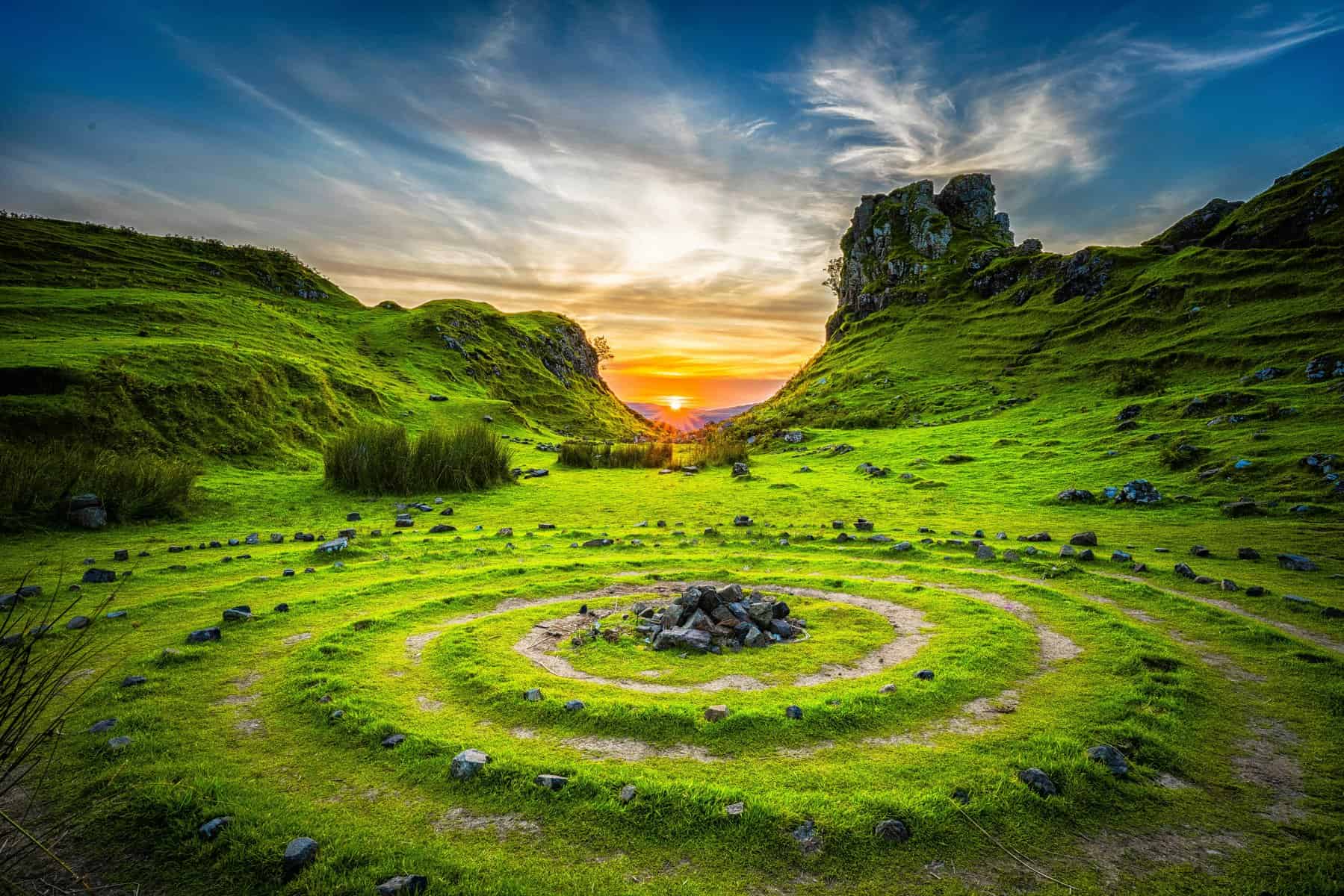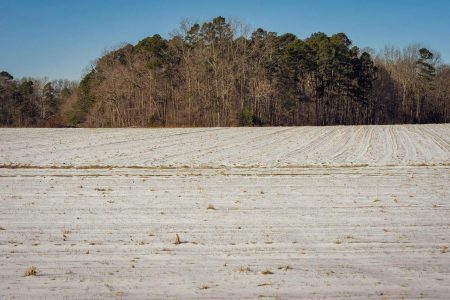
Fallow land is farmland left unplanted for a season, not abandoned, not forgotten, but intentionally at rest. The farmer knows what they are doing. The soil needs time to recover, to restore what it has given, so that when the season turns it can produce something worth harvesting. It looks like nothing is happening. That is the point.
That is also, I have come to realize, a pretty accurate description of my winter with Druidry.
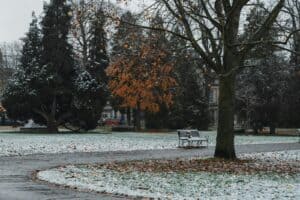
There is a particular kind of guilt that visits spiritual practitioners who go quiet for a while. You had a practice. You were reading, journaling, observing the turning of the year, paying attention to the land. And then, somewhere around the time the leaves finished falling and the cold settled in, it just stopped. Not dramatically or anything. And it didn’t end… so much as it faded, the way daylight fades in November: gradually, then all at once.
That was my winter.
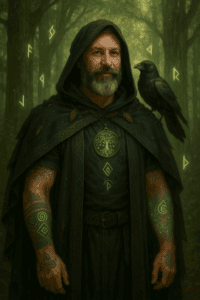
I came into Druidry with real momentum. I was reading voraciously, learning the OghamAn ancient Irish writing system of lines carved along a central stem. It is used historically on stone monuments and spiritually in modern practice. Ogham..., sitting with the trees, noticing things I had never bothered to notice before. It felt alive. And then, without a clear turning point, it didn’t. The books sat on the shelf. The journal stayed closed. Life kept moving. The practice did not.
For a long time, I told myself I wasn’t a Druid anymore. That I had failed some unspoken test of continuity.
And now, I think that’s worth examining.
The Lie of Constant Practice
We carry this idea — absorbed from productivity culture, from religious traditions built on daily obligation, or maybe just from our own perfectionism — that a spiritual path is something you either maintain or abandon. That gaps are failures. That if you weren’t lighting candles and sitting in meditation every morning, you weren’t doing the thing.
But even nature doesn’t work that way.
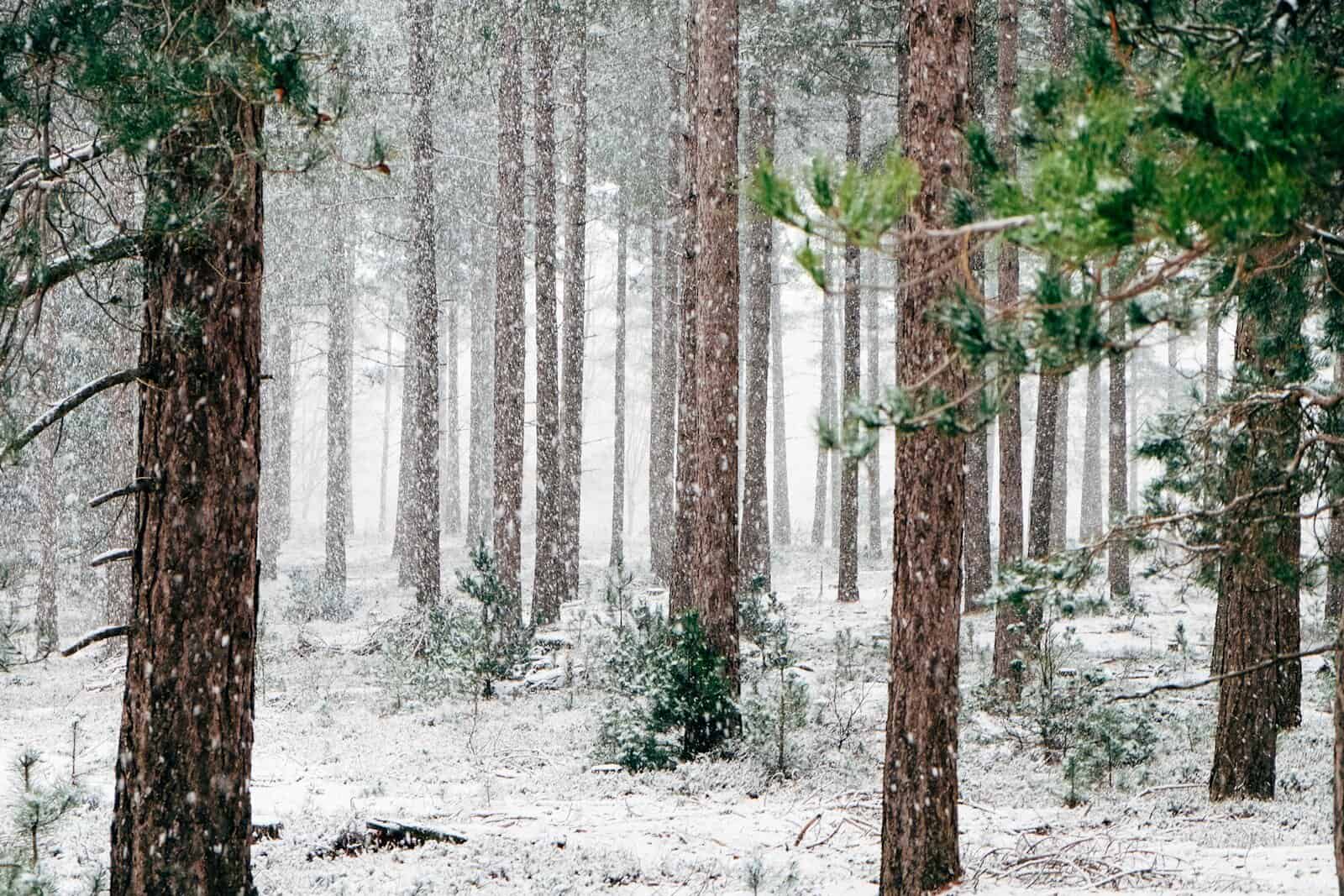
A forest in January is not a failed forest. A field lying fallow is not a ruined field. The hawthorn does not apologize for losing its leaves. The bear does not feel guilty about the den. Rest, withdrawal, and silence are not the absence of life. They are life doing something different with its energy.
If Druidry teaches anything at its core, it is that the world moves in cycles. Not straight lines. Not upward trajectories of constant growth and engagement. Cycles. The year turns. The tide goes out. The practice ebbs.
I had to give myself permission to let mine ebb.
Spring Is Not a Reset
Here is what I have noticed as I feel the pull returning — and I do feel it returning, with the lengthening of the days and the first green things pushing up through the cold — it is not a fresh start. It is a continuation.
The roots did not die. They were just underground, doing the slow work that roots do when no one is looking.
What I learned in the active months last year did not vanish because I went quiet. The awareness I practiced — the habit of actually looking at the sky, of registering the quality of light in the afternoon, of knowing which trees line the road I drive every morning — that did not disappear. It just went quiet. And now it is waking up again.
That is not failure and recovery. That is the cycle working exactly as it should.
On Not Feeling Like a Druid
There is something else worth naming, because I know I am not the only one who thinks it.
When the practice fades, the thought follows quickly: I’m not really a Druid. I haven’t done anything. What kind of Druid doesn’t practice?
This is the wrong question, and it took me a while to understand why.
Druidry is not a title you earn and then possess. It is not a credential. You do not become a Druid the way you become a licensed plumber, by completing a defined sequence of steps and then holding the designation forever regardless of what you do next.
It is a verb before it is a noun.
It is paying attention to the world around you. It is sitting with the uncomfortable things instead of running from them. It is working, steadily and without fanfare, to be a better and more honest version of yourself. It is noticing the crow on the fence post and actually stopping to look at it. It is reading something hard and letting it change you a little.
None of those things require a ritual. None of them require a journal entry or a formal practice or a specific set of books on your shelf.
When I remind myself of that, the guilt gets quieter. Because even through the fallow months, I was still paying attention. Still trying to act with more integrity than the day before. Still noticing the world, even when I wasn’t writing any of it down.
That, I think, is the practice. The other things — the study, the ritual, the formal engagement with tradition — those are fuel for it. Good fuel. Important fuel. But the fire itself is in the living.
What Spring Feels Like This Year
I am not announcing a grand return. I am not setting a schedule or making promises to myself about consistency. I learned something from the winter: pressure kills the thing you’re pressuring.
What I am doing is leaving the door open. Picking up the threads again, slowly. Letting curiosity lead rather than obligation.
The land is waking up. Something in me is waking up alongside it.
That feels like enough.