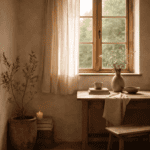
Winter has long been understood as a sacred season because it demands rest, whether we choose it or not. In the agricultural world, the land offers little outward growth during this time and survival depends on conserving energy, protecting what has already been gathered, and waiting. Rest in this sense isn’t laziness; it’s a necessary act of trust that life would return in its proper time.
In druidic and folk traditions, Winter became known as the hearth-season for this reason. As work in the fields ceased, life gathered inward toward fire and shelter. The hearth was more than a source of warmth; it was the center of memory, storytelling, and continuity. Silence in Winter is like holding space, it’s a pause in which lessons could be heard that are drowned out during more active seasons. A time of silent reflection.
Light also took on special meaning during the long winter nights. A single candle or fire did not banish the darkness, but it did make it more bearable. Because of this, light became a symbol of courage rather than dominance, a reminder that endurance does not require brightness, only presence.
Beneath the frozen ground, seeds remain alive but inactive, holding their growth in reserve. This was understood as counsel rather than dormancy: its life choosing patience over urgency. Winter asks the same of us: protect our ideas, hopes, and strength, allowing them to mature quietly until conditions are right for release.