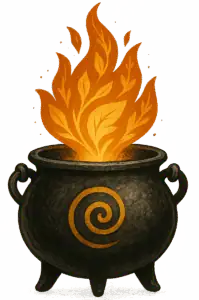
Yule is rooted in the turning of the year at midwinter, a moment our ancestors understood not as an ending, but as a pause between breaths. After weeks of shortening days, the solstice marked a subtle shift… it’s the point at which the sun, having reached its lowest path, would begin its gradual climb once more. Though the change was barely perceptible, it carried enormous meaning. In a world shaped by weather, harvests, and survival, this small return of light signaled that winter, however harsh, was not eternal.
Across northern Europe, midwinter was honored as a sacred threshold. Fires were kept burning, homes were decorated with evergreens, and communities gathered to share warmth and food. These practices were not celebrations of abundance; they were acts of intention. Ways of preserving life, courage, and continuity through the coldest season. In places like Scandinavia, Yule observances stretched across multiple nights, blending feasting, ritual, and quiet vigilance as people watched for signs of the sun’s return. In the Celtic world, monuments such as Newgrange reveal how deeply this moment was woven into the spiritual landscape, aligning stone and passage so that light would reach the inner chamber only once each year, affirming the enduring bond between land, sky, and human life.
The symbols of Yule reflect this same understanding. Evergreens speak to life that persists through winter. Candles and hearth fires echo the fragile but enduring presence of light. The Yule log, slowly burning through the long night, becomes a reminder that warmth is something tended, not taken for granted. Many of these symbols survived into later traditions, quietly absorbed into Christmas customs, carrying forward the older truth beneath new meanings.
For modern Druids and those who walk a nature-centered path, Yule is less about ritual performance and more about posture, it’s how we meet the season inwardly. It is a time for rest without guilt, reflection without urgency, and trust without certainty. The long night invites us to slow our pace, tend what sustains us, and allow ideas, intentions, and healing to gestate unseen. Yule teaches that darkness is not failure or absence, but fertile ground. As the light begins its slow return, we are reminded that renewal does not rush, it unfolds in its own time, asking only patience, care, and quiet faith in the cycle that carries us forward.