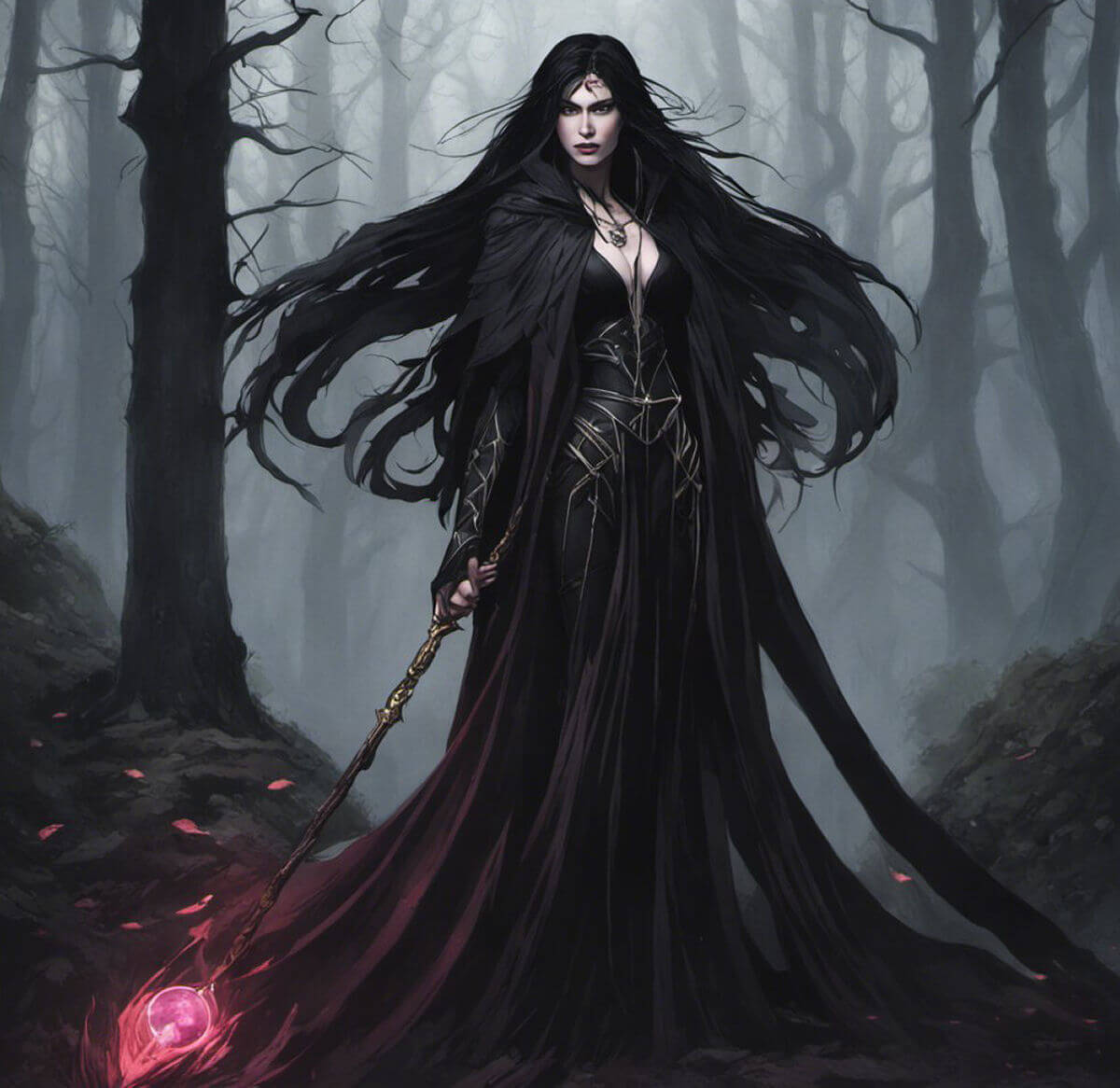
The MorríganA powerful, shape-shifting goddess of battle, prophecy, and sovereignty. The Morrígan appears as crow or woman at the threshold of conflict, foretelling fate and stirring... more... is one of the most arresting presences in Irish tradition: a figure of terror and truth whose prophecies cut through self-deception. She is associated with warfare, death, and sovereigntyThe principle of rightful authority grounded in balance and service. It ties leadership to harmony with the land and people. The concept stresses responsibility over... , the right ordering of power , and appears at liminalThe threshold between two states moments where choices harden into fate. Beginners might picture her as the crow at the edge of the battlefield, both witness and weaver of outcomes.
Texts often portray the Morrígan as a composite or triadic goddess. Names such as Badb, Macha, and Anand are sometimes presented as sisterly aspects within the Morrígna , a cluster of powers that include frenzy, speed, and wealth/fertility in different strands. This fluidity is part of her nature: she shape-shifts, washes the hero’s bloody garments before combat, or meets champions at fords to test their truth.
In the tale of the Second Battle of Mag Tuired, the Morrígan unites with the DagdaGreat king and master of abundance, the Dagda wields a cauldron that never runs empty, a club that kills and revives, and a harp that... more... before the fighting and then proclaims victory for the Tuatha Dé DanannA divine race in Irish mythology associated with magic, wisdom, and the natural forces of the land. After being defeated by the Milesians, they retreated... more.... She drives cattle, confounds enemies, and delivers oracles that feel like the weather turning. In other stories, her encounters with heroes such as Cú Chulainn carry the electric edge of fate: she offers aid, is refused, and later appears to foretell the hero’s doom , not as punishment but as relentless truth.
Why is the Morrígan important? Because sovereignty begins within. She calls practitioners to choose integrity over comfort, to cut what must be cut, and to stand by hard-won oaths. Many modern devotees honor her not with bloodshed but with disciplined training, advocacy for the vulnerable, and personal boundaries that protect what is sacred.
Her symbols include the crow or raven, the washer at the ford, and the crimson of urgency. Offerings might be simple acts of courage, truthful speech, or dedicated work that protects the community. In ritual she is often invoked to clear confusion before major decisions; in daily life, to end patterns that keep us small.
If you carry one lesson from her lore, let it be this: the Morrígan is not chaos for its own sake. She is the storm that strips away deadwood so the groveA small community of Druids or a sacred stand of trees used for learning and ritual. It represents connection can breathe again. When you hear her voice, it may sound like a caw above the wind , but the message is always precise: be honest, be brave, and choose what is worthy of your oath.