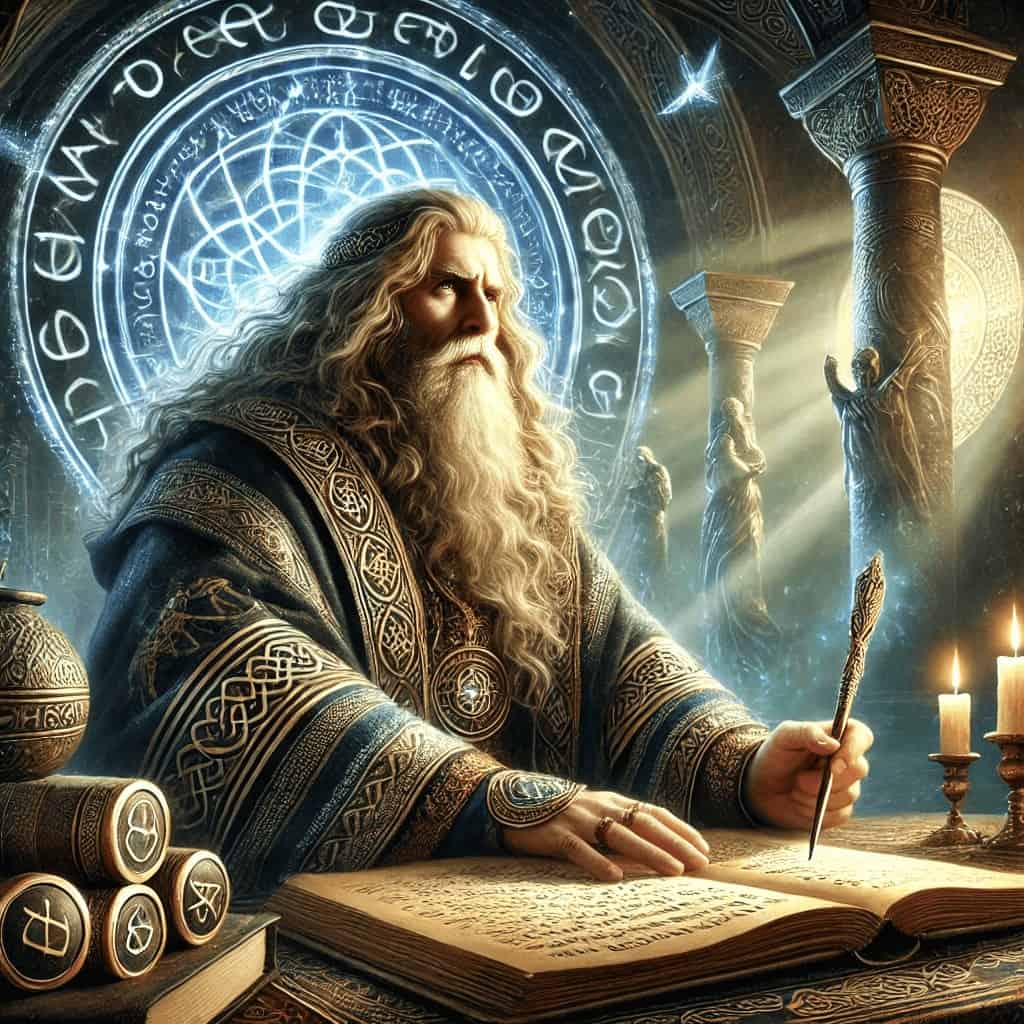
Ogma is the warrior of eloquence,a figure who marries physical strength to the bindingThe act of limiting harmful action or influence through symbolic means. It prevents interference without aggression. The practice emphasizes restraint and justice. force of speech. Later tradition credits him with the invention or patronage of OghamAn ancient Irish writing system of lines carved along a central stem. It is used historically on stone monuments and spiritually in modern practice. Ogham..., the notched script carved along the edge of wood or stone. Whether or not he “invented” the alphabet, Ogma personifies a deeply Irish insight: words are deeds. Promises hold weight, judgments restore balance, and poetry carries power that can move hearts and herds alike.
Descriptions of Ogma vary across sources. In one dramatic image he leads enemies with chains fixed to their ears,chains forged of honeyed words rather than iron. The scene is theatrical, but the meaning is clear: persuasion can lead where force cannot. His possible epithet GrianainechGod of eloquence and strength, often credited with creating Ogham, the early Irish script. Ogma ties speech to power, showing how words bind, inspire, and... more... (“sun-faced”) hints at charisma and clarity, and he is often paired with a heavy club, signaling the union of rhetoric and strength. In the company of the Tuatha Dé DanannA divine race in Irish mythology associated with magic, wisdom, and the natural forces of the land. After being defeated by the Milesians, they retreated... more... he stands at the thresholdA physical or symbolic boundary between one state and another. Crossing it represents entry into new experience. Awareness of thresholds cultivates mindfulness. between the feast-hall and the battlefield, ensuring that oaths are rightly spoken and courage rightly directed.
Ogma’s association with Ogham places him at the root of bardic craft. Ogham inscriptions mark boundaries, claim property, remember the dead, and compress identity into scored lines that an initiate can read by touch. The earliest literacy of Ireland was tactile, public, and tied to land,an apt canvas for Ogma’s patronage. For beginners, this means that honoring Ogma can be as simple as learning an alphabet, practicing careful diction, or committing a poem to memory. He is a fitting ally for writers, lawyers, translators, activists, mediators, and anyone who knows that sloppy language breeds sloppy thinking.
In the larger web of relationships, Ogma stands close to BrigidGoddess of healing, poetry, and craft; a bright, many-skilled patron of hearth and inspiration. Brigid bridges sacred fire and fresh water, blessing poets, healers, smiths,... more... in the guild of artisans: one shapes metal and healing; the other shapes sound and law. With the DagdaGreat king and master of abundance, the Dagda wields a cauldron that never runs empty, a club that kills and revives, and a harp that... more... he shares the duty of upholding hospitality, speaking for the feast’s rules so that plenty can remain abundant; with LughMany-skilled champion of the Tuatha Dé Danann; patron of arts, oaths, and victory. Lugh is the bright master of every craft whose festival Lughnasadh marks... more... he stands shoulder-to-shoulder in battle, where clear orders and steadfast promises decide outcomes as surely as spear and sling. Under Danu’s ancient matronage, Ogma’s words become a river of social trust.
To approach Ogma in practice, consider offerings that respect truth and form: public recitation, debate that aims for understanding rather than victory, or the patient work of revising sloppy paragraphs until they sing. Keep an oath you have delayed, or apologize cleanly for a word misspoken. These small rites carry weight because they change behavior. Ogma’s blessings show up as clarity in the mouth and steadiness in the heart,a felt alignment between what you say and what you do.
For a newcomer’s mnemonic: think Ogham = Ogma.Trickster-mage of the Mabinogi whose cleverness makes and unmakes fates. creator of Blodeuwedd and tutor of Lleu. more... When you see notched lines on a standing stone, imagine a broad-shouldered figure whose chains are made of golden sentences. He does not despise force,he simply aims to win the fight before it starts, by telling the truth so precisely that the world has no choice but to answer.