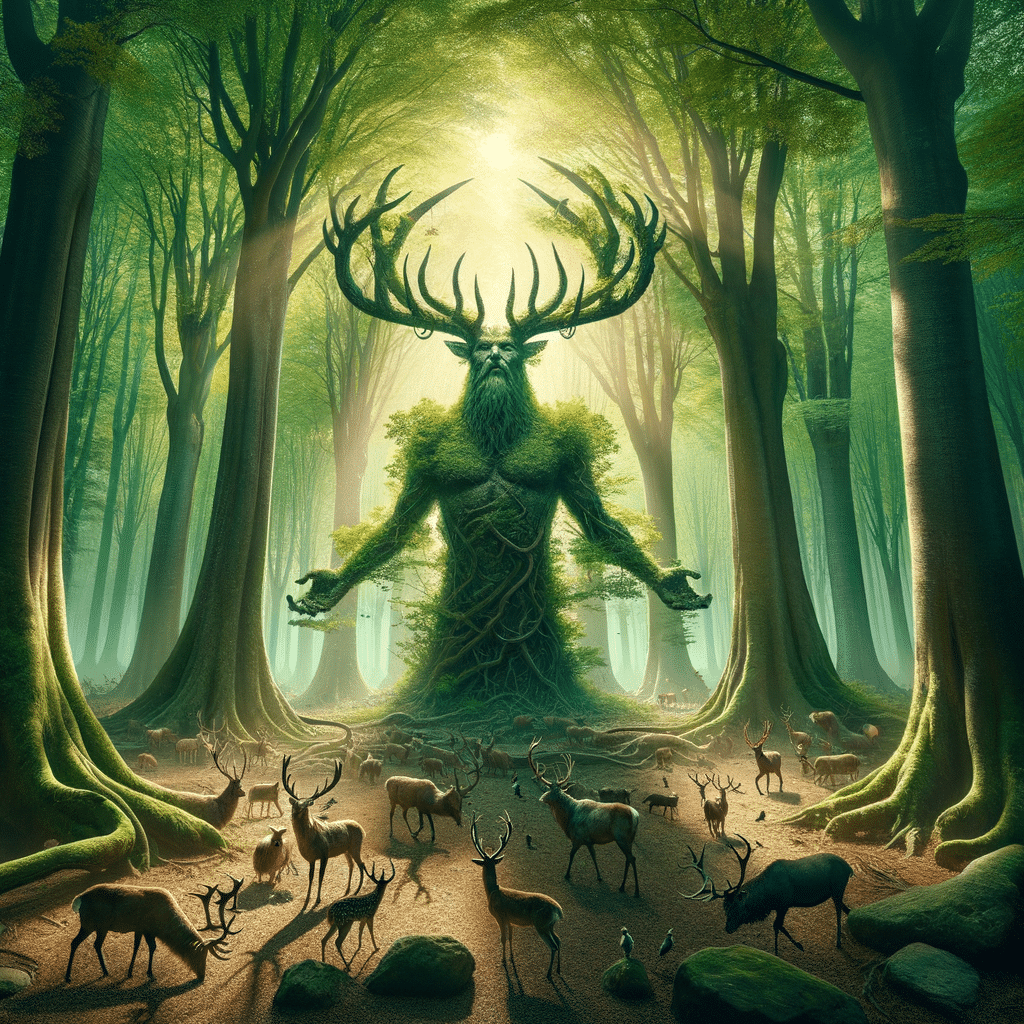
CernunnosHorned god of wild places, pictured seated cross-legged with stag antlers. Cernunnos governs the traffic of life between wilderness, wealth, and the underworld’s deep stores.... more... is the enigmatic horned god of the Celtic world, best known from reliefs and statues in Gaul and Roman Britain rather than from narrative myths. He sits cross-legged, crowned with stag antlers, often holding a torcA rigid metal neck ring symbolizing status and a ram-horned serpent, with animals gathered near. Coins spill from a bag, hinting that wealth and wildness are not enemies but parts of one living economy.
Because we lack long stories about Cernunnos, interpretation leans on images. The antlers tie him to seasonal cycles and the vitality of the herd; the serpent suggests chthonic power and renewal; the torc proclaims status; and the coins gesture to prosperity. All together, Cernunnos appears as a keeper of exchanges , between forest and field, beast and human, life and the deep underworld stores where value rests until it rises again.
For beginners, Cernunnos is a patron of right relationship with nature. Offer service that protects habitat, honor the animals you eat by wasting less, and spend time quietly in woods or parks. He teaches that abundance isn’t just what you own but the health of the whole system that sustains you.
While Cernunnos doesn’t slot neatly into the Irish Tuatha genealogies, his presence complements them. Many modern practitioners sense a kinship between him and figures like DanuAncestral mother of the Tuatha Dé Danann, associated with rivers, abundance, and the mysterious wellspring of skill and magic. more... in the way life circulates through land and community. If you want an image to remember, picture a stag pausing at the edge of a clearing while a quiet figure watches , not to tame, but to tend the balance. That’s Cernunnos: wild, sovereign, and surprisingly generous.