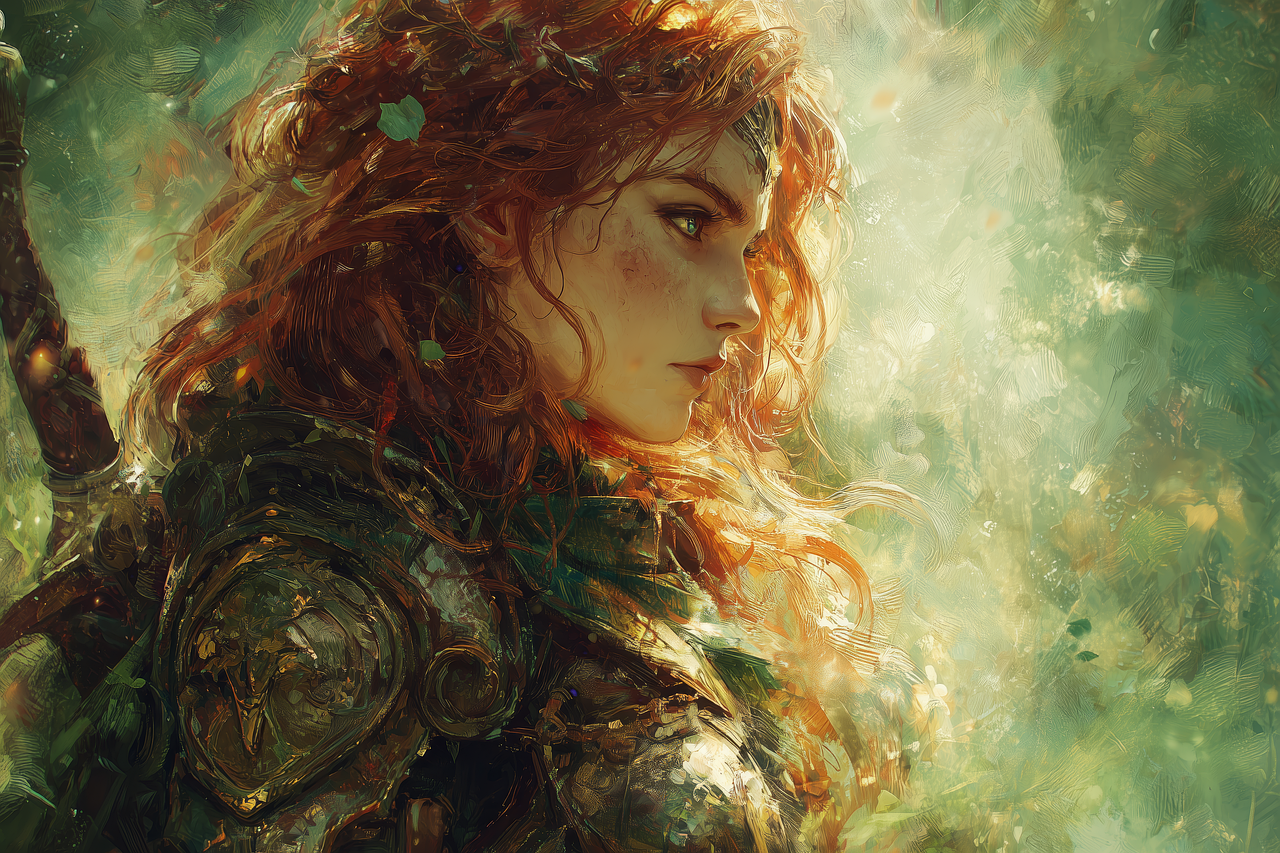
Brigid is among the most beloved figures in the Irish tradition: a luminous goddess whose domains weave together healing, poetry, and craft. Her presence is felt wherever the hearth is tended, a well is blessed, or a poem is born. Beginners can think of her as a bright bridge between fire and water , the warmth of inspiration and the clarity of renewal.
In Old Irish sources Brigid (Bríghid/Bríg) is connected to the Tuatha Dé DanannA divine race in Irish mythology associated with magic, wisdom, and the natural forces of the land. After being defeated by the Milesians, they retreated... more..., the divine peoples of skill and art. The meaning of her name is commonly linked to “exalted” or “high,” and related forms appear across the Celtic world, including the Romano-British BrigantiaGoddess of healing, poetry, and craft; a bright, many-skilled patron of hearth and inspiration. Brigid bridges sacred fire and fresh water, blessing poets, healers, smiths,... more.... Over centuries, elements of her cult were absorbed into Christian tradition through Saint Brigid, which is why customs at ImbolcA festival marking the first stirrings of spring and the return of light. It is associated with cleansing, creativity, and new beginnings. Many traditions honor... (early February) and the weaving of the Brigid’s crossA woven rush cross made at Imbolc to bless home and hearth. It symbolizes protection and creativity. The craft continues as a seasonal tradition. continue in folk practice today.
Brigid’s three great specialties , healing, poetry, and smithcraft , describe a complete cycle of transformation. The healer restores, the poet envisions, and the smith gives form in lasting substance. Many modern practitioners experience Brigid as a triple goddess, not three different people but one power expressed in three masteries. Iconographically she is close to the hearth and to holy wells, and she loves the work of human hands: bread baking, metal shaping, and careful craft of any kind.
In story, Brigid appears both as a caring protectress and a patron of inspired action. Her relationships situate her among the Tuatha: some sources name the DagdaGreat king and master of abundance, the Dagda wields a cauldron that never runs empty, a club that kills and revives, and a harp that... more... as her father, and tradition often casts DanuAncestral mother of the Tuatha Dé Danann, associated with rivers, abundance, and the mysterious wellspring of skill and magic. more... as the ancestral mother of her people. This family setting highlights Brigid as the bright heart of a living community; she is not remote or aloof, but immediate and practical.
Why is Brigid important? Because she gathers the tools of everyday life , warmth, words, and work , and renders them sacred. If you know nothing else, remember that she blesses both poem and plough, candle and cauldronA large vessel representing transformation. For seekers at the beginning of their exploration, Brigid offers a simple practice: tend a small flame, share food or hospitality, and speak words of gratitude. You have already stepped into her shrine.
Notable lore surrounds the festival of Imbolc, the thresholdA physical or symbolic boundary between one state and another. Crossing it represents entry into new experience. Awareness of thresholds cultivates mindfulness. of spring. Households set out a cloth for Brigid to bless, kindled candles for the returning light, and welcomed the goddess into the home with hospitality. The later Christian saint inherits much of this ritual calendar, preserving the sense that Brigid turns winter toward spring. In many modern communities, Brigid remains a patron of artists, healthcare workers, and anyone who keeps the fires of care and creativity burning.