Aengus mac ÓgPoetic, youthful god of love and dream-vision, son of the Dagda and the river goddess Boann. Aengus charms with hospitality and cunning, guiding seekers toward... more...,“Aengus the Young”,is the bright, charming youth of the Tuatha Dé DanannA divine race in Irish mythology associated with magic, wisdom, and the natural forces of the land. After being defeated by the Milesians, they retreated... more..., patron of love, poetry, and the dream that turns a life in a new direction. Son of the DagdaGreat king and master of abundance, the Dagda wields a cauldron that never runs empty, a club that kills and revives, and a harp that... more..., lord of abundance, and the river goddess BoannGoddess of the River Boyne, associated with inspiration, fertility, and the generous flow that nourishes both land and story. Mother of Aengus by the Dagda. more..., Aengus lives at Brú na Bóinne (Newgrange), a radiant síd whose winter solsticeThe point in the year when the sun reaches its greatest northern or southern position. It marks either the longest or shortest day. Observing it... sunlight pierces the darkness like a promise kept. His hall is a place of hospitality and music where worries soften and friendship flows as generously as mead.
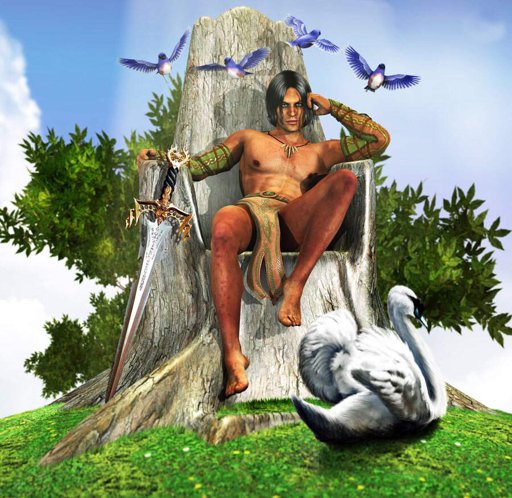
One beloved tale says that Aengus dreams of a young woman so captivating that waking life will not do. He searches until he finds Caer Ibormeith, a swan-maiden bound by an otherworldThe Celtic spiritual realm intertwined with the mortal world. It is a place of ancestors geisA personal vow or taboo carrying spiritual consequence if broken. It binds action to destiny and integrity. Observing a geas cultivates mindfulness of choice.. When the time comes to free her, Aengus transforms into a swan and flies beside her, their song lulling all who listen into gentle sleep. The point is not escapism but transformation: love remakes the lover. Aengus is youthful not because he avoids responsibility, but because he renews the heart’s willingness to risk joy.
Cleverness is part of his charmA spoken or crafted expression of intent for protection. In another story Aengus asks his father for the brugh “for a day and a night.” The Dagda agrees,only to realize later that in the legal idiom of the time, day-and-night implies permanence. The trick works because it reveals generosity already present; the house expands to include the son. This legal wit underlines themes of hospitality and rightful belonging that run through Aengus’s lore.
Why is Aengus important for beginners? He provides a friendly doorway into Irish myth. Where some deities confront with dread or law, Aengus invites with song and shared bread. Offerings can be simple: play music for someone you love; dedicate a sweet dessert to him; write and actually send a note that names what is good. He is a natural patron for artists building communities of care and for anyone choosing tenderness over cynical detachment.
His relationships illuminate the network of the Tuatha. Through Boann he ties love to flowing inspiration; through the Dagda he connects romance to abundance and feast. By kinship and temperament he stands near BrigidGoddess of healing, poetry, and craft; a bright, many-skilled patron of hearth and inspiration. Brigid bridges sacred fire and fresh water, blessing poets, healers, smiths,... more... among the makers, and he moves easily under Manannán’s mists where gifts pass across thresholds. Seen this way, Aengus is less a solitary Cupid than an organizer of joy,one who turns houses into homes and guests into kin.
If you want a single image to carry from his stories, imagine a winter sunbeam reaching deep into a dark chamber as two swans wheel above a river. That is Aengus: grace entering the ordinary, hospitality strong enough to change the temperature of a room, and a young heart that stays young by choosing love again and again.